| Most viewed - Heritage |
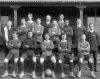
Helensburgh FC 19071530 viewsThe Helensburgh team and management in 1907. In the middle row third from right is Abraham Reece. Image supplied by Sue Taylor.
|
|
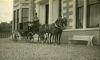
Horses and Carriage1528 viewsOutside Bellcairn House, Cove, in 1913.
|
|
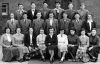
Hermitage School Class 3 19531528 viewsBack row (from left): Willie McSporran, Victor Petrie, Jimmy Reid, Arthur Payne, Donald Gilchrist, Kenneth Craig; middle: Doris Grierson, Eric Bowman, Kenneth Murray, Donald Lawrie, Donald Maclean, Jim Williamson, Elinor Strang; front: Elza Logan, Florence Johnson, Joan Stewart, ?, Sheena MacGregor, ?, Angela Boddie, Elaine Dodd, Cathie McDiarmid. Image supplied by Donald Maclean.
|
|
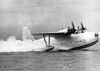
Lerwick flying boat1527 viewsA Lerwick flying boat from the Second World War. These aircraft were tested and modified by the Marine Aircraft Experimental Establishment based at Rhu Hangars from 1939-45.
|
|
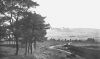
The Old Luss Road1525 viewsThe old road leading from Helensburgh over the Blackhill to Luss and Loch Lomond. This lithographic duotone view was produced in 1923 for inclusion in Walter Hutchinson's 'Beautiful Britain' series of topographical studies of the British Isles.
|
|
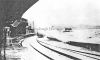
Stormy Craigendoran Station1525 viewsWaves break over the line and platform at Craigendoran Station leading down to the steamer terminal. In the distance is thought to be the old Drumfork Ferry House. The station and terminal opened for business under the North British Railway on May 15 1882, and steamer services were finally withdrawn in 1972. The piers have since become derelict, and on the firth side of the line the station buildings are long gone. Image date unknown.
|
|
West Clyde Street looking east1523 viewsLooking east along West Clyde Street.
|
|
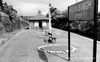
Helensburgh Upper Station1523 viewsA view of Helensburgh Upper Station from the west. A very deep cutting was excavated for the station on the West Highland Railway, which opened to traffic in 1894. Like all the local upper stations except Rhu, it was originally designed to look like a Swiss chalet, and it had its own coalyard to east of Sinclair Street where the Maclachlan Road flats are now. Image circa 1960; copyright D.K.Jones Collection.
|
|
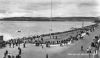
West Esplanade1523 viewsHelensburgh's west esplanade and putting green packed with people on what looks like not too warm a day. Image date unknown.
|
|
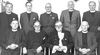
Moderator's visit1521 viewsThe Moderator of the General Assembly of the Church of Scotland, the Very Rev Dr Roy Sanderson, was in Helensburgh in September 1967 as part of a visit to Dumbarton Presbytery. This picture at the Queen's Hotel shows (standing) the Rev Jack Dutch of Old and St Andrew's, the Rev Andrew Scobie of Cardross, the Rev Dr George Logan of Park, the Rev Merricks Arnott of Rosneath, the Rev J.Murray of Garelochhead; (front) the Rev L.A.Ritchie of St Columba, the Rev Robert Cairns of St Bride's, Dr Sanderson, and the Rev Dr T.Crouther Gordon of Helensburgh.
|
|
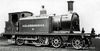
Engine 'Helensburgh'1521 viewsThree of these 47-ton Drummond 4-4-0T locomotives were built in 1879 by Neilson & Co. No further D50s were built, and the last two were withdrawn in 1926. The D50s worked the trains between Glasgow and Helensburgh before being replaced by Reid C15 4-4-2T tank engines in 1913. They then moved to Dundee, Eastfield, and Parkhead. All three members of the D50 class were named — 494 Craigendoran, 495 Roseneath, 496 Helensburgh. Image supplied by Jim Chestnut; date unknown.
|
|
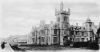
Shandon Hydropathic Hotel1520 viewsOriginally West Shandon, this magnificent building was the home of Robert Napier, the greatest figure in Clyde shipbuilding and marine engineering in the mid-19th century. During World War One the Hydro became a hospital, and in World War Two it was used by the army. In 1951 it became a hotel again, but in 1957 it was closed and demolished.
|
|
| 2190 files on 183 page(s) |
 |
|
|
|
|
61 | |
|
|
|
|