| Most viewed - Heritage |
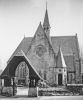
Luss Church907 viewsIt is believed that St Kessog (or MacKessog) founded a church in Luss in the year 510, and it was in the name of Kessog that King Robert the Bruce went into battle against the English at Bannockburn in 1314. However the present building was opened in 1875 to commemorate the deaths of Sir James Colquhoun and a group of his gamekeepers in a boating accident in Loch Lomond two years earlier — indeed from inside the roof looks like an upturned boat. Some of the graves in the churchyard go back to the 7th or 8th century, and there is also a Viking hogback stone. Photo by Professor John Hume.
|
|
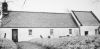
St Mahew's907 viewsThe origins of this chapel are lost in the mists of time but gravestones there have been dated to the 9th or 10th century. The earliest surviving documents which speak of a chapel at Kilmahew come from the reign of King David II (1329-70). Following the Reformation in 1560 the chapel became derelict, but from 1640 until 1846 part of it was used as the village school. In 1948 it was acquired, as part of the Kilmahew Estate, by the Roman Catholic Archdiocese of Glasgow. Five years later work on restoration started and it began to serve again as a chapel in 1955. Today it is believed to be perhaps the oldest place of worship in the west of Scotland still being used for its original purpose. Photo by Professor John Hume.
|
|
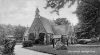
St Modan's Church907 viewsA 1905 image of Rosneath Parish Church, St Modan's.
|
|
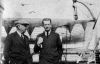
Baird and Wells903 viewsThe novelist H.G.Wells (1866-1946), one of the earliest writers of science fiction, and John Logie Baird met for the first and only time in October 1931 on board the liner Aquitania, on route to New York. Image first published in Baird's memoirs "Television and Me" by courtesy of the Royal Television Society.
|
|
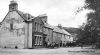
Luss Hotel900 viewsTravellers arrive at Luss Hotel on Loch Lomondside. Image c.1900 by courtesy of the Helensburgh Memories website.
|
|
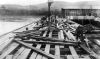
Storm damage900 viewsA 1911 storm caused serious damage to Craigendoran pier. Image supplied by Malcolm LeMay.
|
|
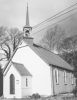
Peaton Church894 viewsThis small corrugated iron church was affectionately known as "The Tin Hut Church". It is not known when this church opened, but it was certainly in existence before 1893. It was generally only used for a short time in summer, principally to cater for visitors to the area. It stood by the shore road between Cove and Coulport and was used until 2002, being finally demolished eleven years later. Photo by Professor John Hume.
|
|
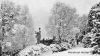
Snowy Hydro894 viewsA 1904 image of a snowstorm at Shandon Hydropathic Hotel. Originally West Shandon, this magnificent building was the home of Robert Napier, the greatest figure in Clyde shipbuilding and marine engineering in the mid-19th century. During World War One the Hydro became a hospital, and in World War Two it was used by the army. In 1951 it became a hotel again, but in 1957 it was closed and demolished.
|
|
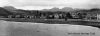
Garelochhead beach889 viewsThe tide is in at Garelochhead in this image published and issued by the proprietor of Shandon Hydro Hotel. Image date unknown.
|
|
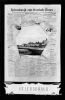
News by postcard885 viewsThe February 13 1907 front page of the Helensburgh and Gareloch Times weekly newspaper featured on a promotional postcard.
|
|
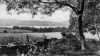
Gareloch view884 viewsA 1909 image of the Gareloch from Highlandman's Road above Rhu.
|
|
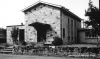
Church of Christ, Scientist881 viewsHelensburgh's Church of Christ, Scientist, in West Princes Street, was designed in 1956 by Margaret Brodie. The First Church of Christ, Scientist had its beginnings in Helensburgh in 1910, and a plot of ground at 138-144 West Princes Street was bought in 1946; ten years later a church was built there. By 2015 the building was closed and for sale, and it was bought by a firm of architects who announced two2 years later that they would convert it into flats. Photo by Professor John Hume.
|
|
| 2190 files on 183 page(s) |
 |
|
|
|
|
168 | |
|
|
|
|