| Most viewed - Heritage |
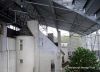
Hill House979 viewsA 2019 image of the damp penetration at the Charles Rennie Mackintosh mansion Hill House in Upper Colquhoun Street, currently protected by a £4million metal box roof.
|
|
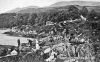
Portincaple shore978 viewsA 1912 image of the shore at the Loch Longside fishing village of Portincaple, with several local people on the rocks.
|
|

Henry Bell's Comet976 viewsA painting by well-known Helensburgh artist Neil Macleod of Henry Bell's Comet, Europe's first commercial steamship, which had its bicentenary in 2012. Image by courtesy of the owner, David McGowan. Both also permitted Helensburgh Heritage Trust to prepare a limited A3 print of the painting as part of the bicentenary celebrations.
|
|
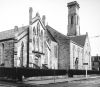
St Columba Church975 viewsThis congregation started in 1839, but did not get its own building until 1844. In 1861 a bigger building was opened next door at the corner of Sinclair Street and West King Street, and the original building became the church hall. Originally called the United Secession Church, the name was changed to St Columba in 1900. The church closed for worship in 2011, and the building in the photo is now called The Tower and functions as a digital arts centre, including a cinema. The former church hall is to become the Scottish Submarine Centre. Photo by Professor John Hume.
|
|
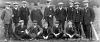
Mystery group975 viewsA well dressed group in the field between Helensburgh and Ardencaple, including an officer from the Training Ship Empress. The occasion and the date is not known. Image supplied by Malcolm LeMay.
|
|
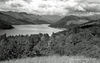
Loch Long973 viewsAn old image of Loch Long, showing Glenmallan and its school on the right, taken by W.W.Kim. Image supplied by Winnie Miller, who thinks the boat is probably one used to recover torpedoes. Onn the left side, just above the sharp point of shoreline, is a direction-finding tower.
|
|
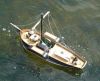
Replica afloat972 viewsThis working model of Henry Bell's Comet steamship was built and sailed by members of Helensburgh and District Modellers Club, who in August 2012, after the bicentenary celebrations, donated it to Helensburgh Heritage Trust for display in the Heritage Centre in Helensburgh Library in West King Street.
|
|
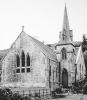
Ballyhennan Church970 viewsSituated on the western edge of Tarbet beside the road to Arrochar, Ballyhennan Church was erected in 1844 as Arrochar Free Church, following the Disruption of the Church of Scotland. There was never an earlier church on the site. It was renamed Ballyhennan in 1929, but it closed for worship in 1966 and has had a variety of uses since then. Currently it is being used as a restaurant called Slanj. It is believed locally that the neighbouring graveyard may contain the bodies of Vikings who were killed in 1263. Photo by Professor John Hume.
|
|
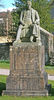
Henry Bell's grave967 viewsThe grave of steamship pioneer Henry Bell in Rhu Churchyard. Photo by Donald Fullarton.
|
|
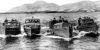
The Balloch Navy967 viewsWorld War Two Home Guard security extended around Loch Lomond, where the Rhu-based Marine Aircraft Experimental Establishment conducted top secret trials, but this was not the responsibility of MAEE. The fear was that German seaplanes might land on Loch Lomond, especially at night, so the four vessels of the ‘Balloch Navy’ patrolled the loch in requisitioned motorboats which were armed and flew the white ensign.
|
|
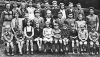
Shandon School c.1944963 viewsElinor Grummitt, who still lives in Shandon, supplied this image from around 1944. She is second left, back row. Her sister is middle of the middle row and her brother second left, front row. Far left is teacher Miss Buchanan, who came after Miss Willan retired, and the lady on the right is Mrs Hutchison, who helped out her janitor husband. The boy, second right bottom row, was Polish. His father was an officer in the Polish army, billeted at Shandon Hydro. His name was Richard Stetner.
|
|
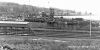
Faslane shipbreaking961 viewsThe Shipbreaking Industries yard at Faslane, clearly illustrating that they broke up old railway locomotives as well as ships. After Faslane had been a military port in World War Two, at the end of 1945 the southern section was handed over to the Royal Navy who used it as a base for the Reserve Fleet. In August 1946 the rest was handed over to Metal Industries (later Shipbreaking Industries) for shipbreaking. Many famous vessels ended their days there, including the last four-funnelled liner, the Aquitania, the German battleship Derflinger which had been scuttled at Scapa Flow, and the last battleship built for the Royal Navy, HMS Vanguard. Image, date unknown, by courtesy of Stewart Noble.
|
|
| 2190 files on 183 page(s) |
 |
|
|
|
|
164 | |
|
|
|
|