| Most viewed - Heritage |

Kidston Park bandstand1258 viewsThe now demolished bandstand at Kidston Park. Bought from the Duke of Argyll in 1877 for £650 by William Kidston with help from Sir James Colquhoun and others, it was formerly Cairndhu Point — known locally as Neddy's Point after a well known fisherman and ferryman who lived nearby — but was renamed Kidston Park from 1889 when Mr Kidston left money to support its maintenance and requested the change. The bandstand was used by the boys bands from the Training Ships Cumberland and Empress. Image circa 1925.
|
|
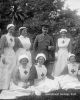
Hermitage nurses1258 viewsDuring World War One from 1914-18 the Helensburgh Town Council-owned Hermitage House in Hermitage Park became a military hospital with a capacity for 58 patients who were sent from Stobhall Hospital in Glasgow. The wounded men in their blue uniforms were a familiar sight in the town, being wheeled around the park by their nurses. A number of local ladies and girls helped out in the hospital and the local Red Cross detachment also assisted the trained nurses. Many local girls met their future husbands among the wounded ‘tommies’, and patients were taken on outings in a horse-drawn carriage from Waldie & Co. in Sinclair Street.
|
|
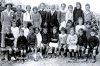
Kilcreggan infants1258 viewsInfant pupils at Kilcreggan School in June 1921 when the headmaster was George S.Rae. Image kindly supplied by Richard Reeve.
|
|
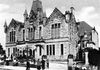
Victoria Hall1257 viewsThe Victoria Hall in Sinclair Street, Helensburgh, with its original metal railings in front which were removed during World War Two to help the war effort. They were replaced to mark the burgh's bicentenary in 2002 after an initiative by the Friends of the Victoria Hall. The building itself was funded by public subscription in 1887 to commemorate Queen Victoria's Diamond Jubilee, and was altered and added to by A.N.Paterson in 1899.
|
|
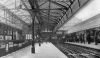
Helensburgh Central1257 viewsHelensburgh Central Station, possibly circa 1890.The photo was taken for Macneur & Bryden Ltd., stationers and publishers of the Helensburgh and Gareloch Times weekly newspaper, whose premises were in East Princes Street opposite the station.
|
|
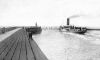
PS Juno1256 viewsOriginally ordered by South of England owners, the 592-ton Juno was built by Clydebank Engineering and Shipbuilding (formerly Thomson) in 1898. She was based at Ayr, where this picture was taken circa 1922, and used for excursions. During World War One she was requisitioned as a minesweeper on the Firth of Forth as HMS Junior. After the war she was based again at Ayr and was there until the end of the 1931 season, before being scrapped the following year.
|
|

Family photo1256 viewsJohn Logie Baird greets his father, the Rev John Baird, and his older sister Annie at the front door of his birthplace, The Lodge in West Argyle Street, in 1928. Annie is holding up her Cairn terrier ‘Jinkie’ to whom she was devoted. Baird’s prosperity is reflected in his immaculate attire which includes spats. On the other hand his father has just stepped out of the door and is still wearing his bedroom slippers.
|
|

David Clyde and wife1256 viewsDavid Clyde, the oldest of three siblings from a Helensburgh family who all became well known actors, is pictured with his wife, Birmingham-born Dorothy Fay Hammerton, and their dog at their ranch in San Fernando Valley, California. As Gaby Fay and later Fay Holden, she too was a well known stage and film actress.
|
|
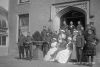
Hermitage patients1256 viewsDuring World War One from 1914-18 the Helensburgh Town Council-owned Hermitage House in Hermitage Park became a military hospital with a capacity for 58 patients who were sent from Stobhall Hospital in Glasgow. The wounded men in their blue uniforms were a familiar sight in the town, being wheeled around the park by their nurses. A number of local ladies and girls helped out in the hospital and the local Red Cross detachment also assisted the trained nurses. Many local girls met their future husbands among the wounded ‘tommies’, and patients were taken on outings in a horse-drawn carriage from Waldie & Co. in Sinclair Street.
|
|
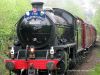
The Great Britain VII1256 views'The Great Britain VII' toured around Britain for several days, mainly hauled by steam engines, in 2014. Day 4 of its travels was April 29 when it travelled from Grange-over-Sands to Edinburgh. The following day saw it going from Edinburgh to Stranraer and back. On Day 6 it split in two, and train A travelled from Edinburgh to Aberdeen and Inverness. Train B left from Edinburgh for the West Highland Line and Fort William, and the photo was taken by Stewart Noble on Saturday May 3 (Day 8) when train B, returning from Fort William to Edinburgh, approached Helensburgh Upper Station. The next day it went from Edinburgh to York. No.62005 is a K-1 class locomotive built by the North British Locomotive Company in Glasgow in 1949.
|
|
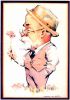
James Gordon Burgess1255 viewsA caricature by Helensburgh artist Gregor Ian Smith of James Gordon Burgess, a keen gardener who won two silver bowls outright — for winning each three years in succession — at Helensburgh Flower Shows in the 1930s for carnations grown in his plot in Hermitage Park. Image supplied by Jenny Sanders.
|
|
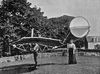
Percy Pilcher with the Bat1255 viewsPercy Pilcher with his sister Ella and the Bat glider at Cardross in 1895.
|
|
| 2190 files on 183 page(s) |
 |
|
|
|
|
110 | |
|
|
|
|