| Most viewed - Welcome to the Helensburgh Heritage Trust Gallery |

Paddling pool1247 viewsChildren play in the paddling pool on the shore at the foot of John Street, Helensburgh. Image date unknown.
|
|

Ross's Hotel1247 viewsRoss's Hotel in Arrochar, Ashfield House, Jenniville, Prospect House, Prospect View and Prospect Bank all belonged to the Ross family. The old Ross's Hotel, which was a small temperance hotel built in the 1870s by Alexander Ross, has now changed its name to the Loch Long Hotel and grown in size to dominate the village landscape. Image date unknown.
|
|
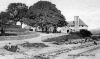
Ferry House1247 viewsChildren play on the shore at Ferry House, Rosneath, formerly Ferry Inn. The Edwin Lutyens-designed building was commissioned by Queen Victoria's daughter Princess Louise, the Dowager Duchess of Argyll, in the 1890s and rebuilt from an old pub, and for a time it was a home for injured soldiers. Bob Hope stayed there while entertaining troops at the nearby World War Two naval base. It fell into disuse, but was rebuilt again in the late 1950s by boatbuilder Peter Boyle. Image circa 1904.
|
|
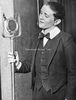
Master Joe Petersen1246 viewsMaster Joe Petersen, billed as 'The Phenomenal Boy Singer', was in fact Mary O'Rourke, born at 6 Maitland Street, Helensburgh, on July 26 1913, the 12th of 14 children of Hannah O’Rourke and her Irish mason’s labourer husband Joseph, who were married in the town on September 16 1892. As Joe, she rose to become a British and continental recording star from 1933 to 42, and in her later years remained a stage favourite in Scotland until she died of bronchitis in Glasgow on Christmas Eve 1964 at the age of 51. Image copyright Herald and Times, Glasgow.
|
|
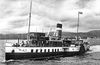
DEPV Talisman1246 viewsBuilt in 1935 by A. & J.Inglis, Pointhouse, Glasgow, for the London & North Eastern Railway, the 544-ton diesel-electric direct drive paddle steamer was used on year-round runs from Craigendoran to Rothesay and the Kyles of Bute. She saw World War Two service as HMS Aristocrat, including being an HQ ship at the Normandy landings. After 1953 she was allocated to the Wemyss Bay - Largs - Millport ferry route. She was withdrawn after the 1966 season and broken up for scrap at Dalmuir in 1967. Image taken 1946.
|
|
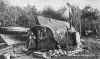
Susie's Castle1246 viewsSusie lived for 60 years in the upturned fishing smack, her 'castle' on the Loch Long shore at Portincaple, and postcards of her home were sold. In this image she is standing at the door knitting and puffing her clay pipe. Her husband Jamie made a living from fishing, and the creel or basket in the foreground would be used for carrying fish. If he had a good catch, he would barrel it up to Whistlefield Station and take the train to Glasgow for the fish market. Image circa 1912.
|
|
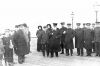
General Booth1245 viewsThe founder of the Salvation Army, General William Booth, leaves from Helensburgh pier the day after speaking at the Victoria Hall on October 26 1910, and is seen with Provost David S.Maclachlan. Booth, born in 1826, was the son of a Nottingham builder and converted to Christianity aged 15. He became a revivalist preacher, and in 1865 he and his wife Catherine set up a Christian Mission in London's east end to help the poor. It was reorganised along military lines in 1878, and the Salvation Army was born. He died in 1912.
|
|
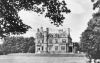
Cairndhu Hotel1245 viewsThe Cairndhu Hotel, later a nursing home for the elderly and now disused and boarded up, photographed by Helensburgh photographer Bill Benzie. Originally Cairndhu House, it was built in 1871 to a William Leiper design in the style of a grand chateau for John Ure, Provost of Glasgow, whose son became Lord Strathclyde and lived in the mansion. Image date unknown.
|
|
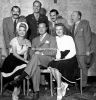
Bob Hope at Rosneath1245 viewsHugely popular American entertainer Bob Hope visited United States Navy Base Two at Rosneath with a concert party in 1945, including Frances Langford and Jerry Colona. This picture was taken at a post-show party at the Princess Louise Officers Club, the Ferry Inn. Image supplied by Dennis Royal, author of the book 'United States Navy Base Two — Americans at Rosneath 1941-45'.
|
|
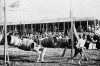
Obstacle race1245 viewsAn obstacle race in Helensburgh on August 15 1901, obviously part of a well attended event.
|
|
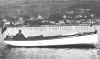
Motor Boat Thistle1244 viewsThe Thistle and helmsman are pictured in the Gareloch opposite Garelochhead, circa 1920.
|
|
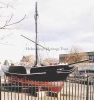
The Comet replica1244 viewsThe 150th anniversary of Henry Bell's Comet was celebrated on September 18 1962 when a replica of the Comet arrived at Helensburgh Pier from Port Glasgow as part of a special regatta. Construction of the working replica was sponsored by Sir William Lithgow, and it is now on permanent display in Port Glasgow town centre.
|
|
| 2190 files on 183 page(s) |
 |
|
|
|
|
87 | |
|
|
|
|