| Most viewed - Welcome to the Helensburgh Heritage Trust Gallery |
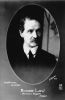
Peace delegate722 viewsA French image of Andrew Bonar Law, then Lord Privy Seal, as one of the five British delegates to the Paris Peace Conference held between January 12 1919 and January 21 1920 to devise the treaties that ended the First World War.
|
|
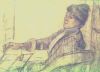
720 viewsLily Blatherwick, by her husband A.S.Hartrick. Copyright the Anderson (Local Collection) Trust.
|
|
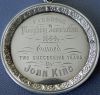
Ploughing medal719 viewsThis Sterling Medal Victorian Watch Fob, described as a stunning example of the workmanship coming out of the United Kingdom during the mid-19th century, was sold on ebay and fetched over £700. It was presented in 1854 by the Cardross Ploughing Association, affiliated with the Highland & Agricultural Society of Scotland and founded in 1784 to promote the regeneration of rural Scotland, as well as the preservation of its poetry, language and music. It was inscribed 'Gained two successive years by John King'.
|
|
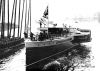
Jeanie launch718 viewsThe much loved LNER Clyde paddle steamer launched on April 7 1931 at the Fairfield yard at Govan. She was extensively refitted after war service, and remained a passenger favourite on cruises from Craigendoran until the end of the 1964 season. The next year she went to the Thames and was renamed 'Queen of the South'. She was broken up in Antwerp, Belgium, in 1967. Photo by courtesy of Paul Strathdee.
|
|
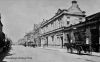
718 viewsCarriages await outside Helensburgh Central Station in East Princes Street when it was the North British Railway Company. Image c.1905.
|
|
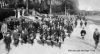
Marching to Rhu717 viewsThe Helensburgh Citizen Training Force marches past Pier Road, Rhu, led by members of the Helensburgh Clan Colquhoun Pipe Band, during World War One. Image supplied by Eric McArthur who suspects the gentleman on the grass verge with the black suit and black hat and walking stick could be his grandfather, Alexander Macarthur, who lived at 56 John Street. The object of the Citizen Training Force was to provide military training for men ineligible for business or other valid reasons to enlist in the Forces.
|
|
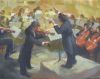
716 viewsThe Conductor, by Caroline Sillars. Copyright the Anderson (Local Collection) Trust.
|
|

Fun on ice713 viewsHelensburgh Skating Pond at the top of Sinclair Street in its heyday as a venue for skating and curling.The surroundings were refurbished with the aid of an EEC grant, but today it is full of weeds. Image date unknown.
|
|
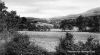
Viaduct view713 viewsAn image of Fernbreck, Garelochead, and the viaduct on the hillside. Image date unknown.
|
|
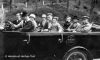
1928 Motorman's Outing712 viewsA Motorman's (Engine Drivers) Outing on July 6 1928. In the back seat of the charabanc is Provost John Sommerville, himself an engine driver on the West Highland Line. Image supplied by Malcolm LeMay.
|
|
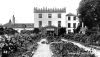
Queen's Hotel711 viewsThe Queen's Hotel was originally Baths House, built by Henry Bell, who built Europe's first commercial steamship the Comet in 1812. The building has had many alterations but still stands on East Clyde Street, having been converted into flats. Image date unknown.
|
|
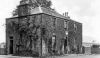
Arden Post Office710 viewsThe Post Office building at Arden was demolished in the 1980s to make way for a series of road improvements, which culminated in the creation of the Arden roundabout on the A82. Image date unknown.
|
|
| 2190 files on 183 page(s) |
 |
|
|
|
|
173 | |
|
|
|
|