| Most viewed - Welcome to the Helensburgh Heritage Trust Gallery |
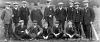
Mystery group846 viewsA well dressed group in the field between Helensburgh and Ardencaple, including an officer from the Training Ship Empress. The occasion and the date is not known. Image supplied by Malcolm LeMay.
|
|
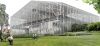
Hill House 'box'845 viewsAn artist's impression of a huge box being erected over the Charles Rennie Mackintosh mansion in Upper Colquhoun Street in 2019 so that works can take place to solve damp ingress. in a pioneering conservation programme. The box is a protective steel frame structure covered in chainmail mesh with walkways around the roof and over the house, allowing people to see the house as never before.
|
|
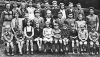
Shandon School c.1944844 viewsElinor Grummitt, who still lives in Shandon, supplied this image from around 1944. She is second left, back row. Her sister is middle of the middle row and her brother second left, front row. Far left is teacher Miss Buchanan, who came after Miss Willan retired, and the lady on the right is Mrs Hutchison, who helped out her janitor husband. The boy, second right bottom row, was Polish. His father was an officer in the Polish army, billeted at Shandon Hydro. His name was Richard Stetner.
|
|
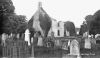
Rosneath Old Parish Church841 viewsSt Modan's Old Parish Church, Rosneath, stands near to its successor, and is surrounded by a graveyard. The church is now a roofless ruin, with some of the walls still standing. This site is said to have had a church for centuries, with this ruined church being the fourth church on the site. There are records of ministers stretching back to 1250. The site was apparently established by St Modan, who may be buried at Faslane. The image is from a 1908 postcard, kindly supplied by the Helensburgh Memories Facebook page.
|
|
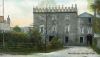
Queen's Hotel841 viewsA pre-1914 image of the Queen's Hotel in East Clyde Street, Helensburgh, from the street.
|
|
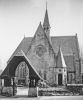
Luss Church840 viewsIt is believed that St Kessog (or MacKessog) founded a church in Luss in the year 510, and it was in the name of Kessog that King Robert the Bruce went into battle against the English at Bannockburn in 1314. However the present building was opened in 1875 to commemorate the deaths of Sir James Colquhoun and a group of his gamekeepers in a boating accident in Loch Lomond two years earlier — indeed from inside the roof looks like an upturned boat. Some of the graves in the churchyard go back to the 7th or 8th century, and there is also a Viking hogback stone. Photo by Professor John Hume.
|
|
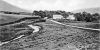
Strone Farm840 viewsA 1905 image of Strone Farm in Glen Fruin.
|
|
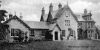
Larchfield835 viewsThe early days of Larchfield School in Colquhoun Street, Helensburgh, photographed by John Stuart who had a photographers business in Helensburgh and Glasgow, and served as Provost of Helensburgh from 1877-84.
|
|
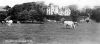
835 viewsCows graze in the field in front of Ardencaple Castle, the ancient seat of the Clan MacAulay. All but one tower of the building was demolished in 1957, and a naval housing estate was built on the site. Image c.1911.
|
|
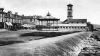
Seafront bandstand835 viewsAn old image of the bandstand on Helensburgh's West Esplanade, with the Granary building and the Old Parish Church beyond. Image date unknown.
|
|
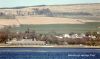
Blue Train832 viewsA Blue Train approaching Cardross from Helensburgh, viewed from Coronation Park, Port Glasgow. Image, date unkniwn, © Thomas Nugent licensed for reuse under the Creative Commons Attribution-ShareAlike 2.0 Generic License.
|
|
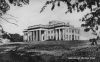
Rosneath Castle832 viewsCompleted in 1806 by London-based architect Joseph Bonomi, this neo-classical mansion replaced a castle burnt down in 1802. It was used as a military hospital during the First World War and was home to Queen Victoria's daughter Princess Louise, the Dowager Duchess of Argyll, until her death in 1939. It was an HQ for the Rosneath Naval Base in World War Two, then abandoned, then damaged by fire in 1947, and demolished in 1961. Image date 1919.
|
|
| 2190 files on 183 page(s) |
 |
|
|
|
|
166 | |
|
|
|
|