| Most viewed - Heritage |

Deborah Kerr CBE1280 viewsA 1970 studio shot of Oscar-winning Helensburgh film and stage star Deborah Kerr CBE, who died in Suffolk on October 16 2007 at the age of 86.
|
|
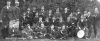
Boys Brigade Band1280 viewsOfficers and boys of a Helensburgh Boys Brigade band, circa 1896. Image supplied by Sue Taylor.
|
|
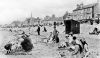
On the beach1280 viewsA 1925 image of families relaxing, playing and building sandcastles on Helensburgh beach just to the west of the pier.
|
|
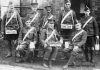
Hermitage Hospital fundraising1280 viewsDuring World War One from 1914-18 the Helensburgh Town Council-owned Hermitage House in Hermitage Park became a military hospital with a capacity for 58 patients who were sent from Stobhall Hospital in Glasgow. The wounded men in their blue uniforms were a familiar sight in the town, being wheeled around the park by their nurses. A number of local ladies and girls helped out in the hospital and the local Red Cross detachment also assisted the trained nurses. Patients also raised funds. Photo by Helensburgh lamplighter Edward Graham, supplied by his great great grandson Ian MacQuire.
|
|

Pier stroll1279 viewsStrolling back up Helensburgh pier, circa 1960, are Stewart Noble (now chairman of Helensburgh Heritage Trust), Lesley Marshall (now Mrs Lesley Kennedy), Jennifer Taylor (now living in Canada), and a visitor from France.
|
|
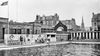
Helensburgh Swimming Pool1279 viewsA 1959 image showing the entrance and the north west corner of the outdoor pool, built in 1928 as a gift from Provost Andrew Buchanan, beside Helensburgh Pier. It was replaced in 1976 by an indoor pool on an adjacent site, and a year later the outdoor pool was closed. It was demolished in 1996 and replaced by a childrens play area. Behind it is an archway which led to the pier, but was demolished some years ago.
|
|
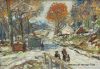
First Snow at Whistlefield1279 viewsAn oil on canvas painting by James Kay RSA RSW entitled 'First Snow at Whistlefield", which in 2014 was valued at £1,500. Kay lived there at Crimea (now Dalriada), Portincaple for 33 years and worked in a studio at 79 West Regent Street, Glasgow. The house belonged to his brother Alec, a shipping office manager. The name was chosen when they moved there in 1909 because his father was a Chief Petty Officer in the Royal Navy during the Crimean War, serving in the Black Sea area. James painted an elaborate mural of scenes from the Crimean War on the walls of the main entrance. Image date unknown.
|
|
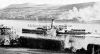
PS Lucy Ashton1278 viewsThe Lucy Ashton approaches Barremman Pier at Clynder. She operated the Craigendoran - Gareloch - Greenock service from the early 1900s until she was withdrawn during the Second World War. The pier was built about 1887 on the instructions of Robert Thom, owner of Barremman Estate, and demolished in 1967.
|
|
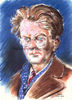
Baird by Coia1278 viewsThis portrait of John Logie Baird by eminent Glasgow artist Emilio Coia was commissioned for Lomond School but was lost in the St Bride’s building fire in 1997, but both Lomond and Professor Malcolm Baird have colour laser copies. The idea was to provide a visible tribute to the school’s greatest former pupil in the absence of any commemoration in the school, and it was unveiled in September 1990 by the inventor’s widow, Mrs Margaret Baird.
|
|

Park bridge1277 viewsA rustic bridge in Helensburgh's Hermitage Park. Image circa 1915.
|
|

West Esplanade1277 viewsA pre-World War Two view of Helensburgh's West Esplanade looking towards the east from near the foot of James Street.
|
|
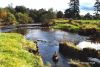
Craigs Pool1277 viewsA view of the most popular summer picnic area in Glen Fruin, Craigs Pool.No apostrophe required, because it is not the pool belonging to, or associated with, anyone called Craig. As with Craigendoran (meaning ‘rock of the otter’) the craigs referred to are the big flagstones on the bottom of the pool. Craig is Gaelic for stone or rock and it is where the word crag or craggy comes from. Image, circa 2006, supplied by Gordon Fraser.
|
|
| 2190 files on 183 page(s) |
 |
|
|
|
|
96 | |
|
|
|
|