| Most viewed - Heritage |

Colour television1313 viewsOn July 3 1928, John Logie Baird achieved colour television for the first time. The camera and receiver were modified versions of the mechanically scanned system first demonstrated by Baird in January 1926. Two months later he demonstrated his new discovery to a scientific audience in Glasgow at the annual meeting of the British Association for the Advancement of Science. The picture is an artistic reconstruction done in 1949 of the July demonstration at his company’s laboratory in London.
|
|
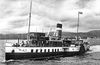
DEPV Talisman1313 viewsBuilt in 1935 by A. & J.Inglis, Pointhouse, Glasgow, for the London & North Eastern Railway, the 544-ton diesel-electric direct drive paddle steamer was used on year-round runs from Craigendoran to Rothesay and the Kyles of Bute. She saw World War Two service as HMS Aristocrat, including being an HQ ship at the Normandy landings. After 1953 she was allocated to the Wemyss Bay - Largs - Millport ferry route. She was withdrawn after the 1966 season and broken up for scrap at Dalmuir in 1967. Image taken 1946.
|
|
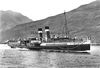
PS Jeanie Deans1312 viewsThe popular paddle steamer Jeanie Deans, circa 1933. She was built by Fairfield at Govan and launched in 1931, then extensively refitted after war service. She remained a passenger favourite on cruises from Craigendoran until the end of the 1964 season. The next year she went to the Thames and was renamed 'Queen of the South'. She was broken up in Antwerp, Belgium, in 1967.
|
|

The Kidston Family1312 viewsMembers of the Kidston family, who owned the mansion Ferniegair next to Cairndhu on the west seafront, are pictured at a family Christmas party, circa 1900. The Kidstons were great benefactors to Helensburgh over many years. Andrew Bonar Law, the burgh man who became prime minister, can be seen on the left in the back row. The photographer was John Stuart, of Thistlebank, Helensburgh. Image supplied by the late John Johnston.
|
|
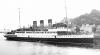
TS Saint Columba1311 viewsThe 785-ton turbine steamer was launched on April 9 1912 at the yard of William Denny & Bros Ltd., Dumbarton. Placed on the Campeltown run in succession to her namesake, she was requisitioned as a troop transport ship from 1915 to 1919 during which time she rammed and sank a German U-Boat. After the war she served Campbeltown, Inveraray and Ardrishaig until World War Two, when she was an accommodation ship at Greenock. She returned to the summer Ardrishaig service from 1947 until the end of the 1958 season, but was withdrawn and scrapped shortly afterwards. She is pictured arriving at Rothesay, circa 1950.
|
|

Helensburgh Seafront1311 viewsA 1939 view of a crowded Helensburgh beach. Image supplied by Norman Hood.
|
|
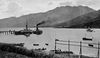
Arrochar Pier and Loch Long1311 viewsTwo steamers are berthed at Arrochar Pier, which was built in 1850 and used to service several steamers daily with visitors from Glasgow. On the other side of the loch is the torpedo testing station. Image circa 1920.
|
|

1st Craigendoran Scout Hall opening1311 viewsVIP guests at the official opening of the 1st Craigendoran Scouts Hall beside the Clyde Centre in October 1981. On the left is Brigadier Alastair Pearson, Lord Lieutenant of Dunbartonshire, and third left is Councillor Billy Petrie. Image supplied by Geoff Riddington.
|
|
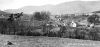
Glen Fruin farm1311 viewsA 1914 image of Glen Fruin, with Drumfad Farm in the foreground.
|
|
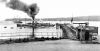
Steamer at Rhu1310 viewsA steamer, probably the 271-ton Lucy Ashton which was used on the Craigendoran-Gareloch run, leaves Rhu (then Row) Pier, with the training ship Empress beyond. Circa 1905.
|
|

“A Fresh Day, Portincaple, Loch Long†by Violet Kay1310 viewsViolet MacNeish Kay (1914–1971) was the daughter of well known artist James Kay (1858–1942), who designed their house Crimea on a hill at Whistlefield, overlooking Loch Long, and it is this view that is the subject of many of their paintings. This painting was acquired in 2009 by the Anderson Trust.
|
|

Ross's Hotel1310 viewsRoss's Hotel in Arrochar, Ashfield House, Jenniville, Prospect House, Prospect View and Prospect Bank all belonged to the Ross family. The old Ross's Hotel, which was a small temperance hotel built in the 1870s by Alexander Ross, has now changed its name to the Loch Long Hotel and grown in size to dominate the village landscape. Image date unknown.
|
|
| 2190 files on 183 page(s) |
 |
|
|
|
|
89 | |
|
|
|
|