| Most viewed - Heritage |
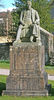
Henry Bell's grave937 viewsThe grave of steamship pioneer Henry Bell in Rhu Churchyard. Photo by Donald Fullarton.
|
|
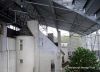
Hill House937 viewsA 2019 image of the damp penetration at the Charles Rennie Mackintosh mansion Hill House in Upper Colquhoun Street, currently protected by a £4million metal box roof.
|
|
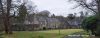
Geilston House936 viewsGeilston House in Cardross, former home of Miss Elizabeth Hendry and Miss Margaret Bell, now owned by the National Trust for Scotland. Dating from 1666 or earlier, it began as a modest thatched laird's house, was expanded to become a villa, and finally a decorated cottage linked to a walled garden. The entire house appears to have been thatched until the early 19th century. Its extensive 200 year-old garden is a popular tourist attraction. Photo by Stewart Noble.
|
|

Rhu from Ardenconnel933 viewsAn old image of Rhu from Ardenconnel, now the home of Rhu Amateurs. Image date unknown.
|
|
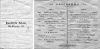
Jack Buchanan on violin927 viewsThe programme for a Larchfield School concert on December 17 1901, showing entertainer Jack Buchanan, then an 11 year-old Larchfield pupil, playing three violin pieces. Programme donated to Helensburgh Heritage Trust by Andrew Widdowson, whose late father John was headmaster in the early 1970s.
|
|
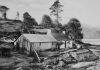
Portincaple923 viewsAn old view of the Loch Longside fishing village of Portincaple. Image date unknown.
|
|
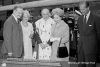
1965 Royal Visit922 viewsThe Queen and the Duke of Edinburgh are pictured in Helensburgh Central Station admiring a model of the first 'Blue Train' which were introduced into service on the Helensburgh-Glasgow line in 1960. The 15 minute visit was on Monday June 28 1965 to open new Dunbartonshire County Counci officesl in Garshake Road in Dumbarton and the royal couple arrived at and left Clydebank on the Royal Yacht Britannia. With them are Provost J.McLeod Williamson and his wife Rosina. Photo by courtesy of Helensburgh Memories on Facebook.
|
|
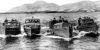
The Balloch Navy920 viewsWorld War Two Home Guard security extended around Loch Lomond, where the Rhu-based Marine Aircraft Experimental Establishment conducted top secret trials, but this was not the responsibility of MAEE. The fear was that German seaplanes might land on Loch Lomond, especially at night, so the four vessels of the ‘Balloch Navy’ patrolled the loch in requisitioned motorboats which were armed and flew the white ensign.
|
|
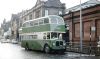
920 viewsA green Garelochhead Coach Services Regent bus is pictured on a rainy day outside Helensburgh Central Station. Image, date unknown,© A.Murray-Rust licensed for reuse under Creative Commons Licence.
|
|

Novelty card919 viewsA novelty card suggesting Helensburgh is a good place for romance! Image date unknown.
|
|
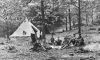
In camp917 viewsMembers of the local scouting Rovers in camp at Luss in the early 1950s. More information would be welcomed. Image supplied by Gordon Fraser.
|
|
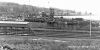
Faslane shipbreaking916 viewsThe Shipbreaking Industries yard at Faslane, clearly illustrating that they broke up old railway locomotives as well as ships. After Faslane had been a military port in World War Two, at the end of 1945 the southern section was handed over to the Royal Navy who used it as a base for the Reserve Fleet. In August 1946 the rest was handed over to Metal Industries (later Shipbreaking Industries) for shipbreaking. Many famous vessels ended their days there, including the last four-funnelled liner, the Aquitania, the German battleship Derflinger which had been scuttled at Scapa Flow, and the last battleship built for the Royal Navy, HMS Vanguard. Image, date unknown, by courtesy of Stewart Noble.
|
|
| 2190 files on 183 page(s) |
 |
|
|
|
|
164 | |
|
|
|
|