| Most viewed - Heritage |

Neddy's Point1009 viewsAn 1840s image of Neddy's Point — now Kidston Park. It was formerly named Cairndhu Point, and was known locally as Neddy’s Point after a well known fisherman and ferryman who lived in a cottage on the point. On it stood the original Ardencaple Coaching Inn, stone from which was used by the Duke of Argyll to build what is now the Ardencaple Hotel. Image supplied by Doris Gentles.
|
|

Rhu from behind1008 viewsAn unusual view of Rhu village from the hill behind. Image circa 1926.
|
|

Forbidding sky1008 viewsA forbidding sky beyond HMS Pursuer during the bicentenary celebrations off Helensburgh pier on Saturday August 4 2012. Photo by Neil MacLeod.
|
|
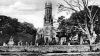
Row Parish Church1008 viewsA 1904 image of Rhu — then Row — Parish Church. It dates from 1851 and stands on the site of an 18th century predecessor. Amongst those buried in the kirkyard is Henry Bell, whose Comet was the world's first commercially successful steamship. In 1851 the marine engineer Robert Napier built the statue which today marks Bell's grave.
|
|

Provost's chain1008 viewsA large engraved link which hangs at the foot of the Helensburgh Provost's chain of office. Possibly presented in 1812, the chain marks to the right the first Provost, steamship pioneer Henry Bell, who served from 1802, the year the town became a Burgh of Barony, to 1809, and to the left Norman M.Glen, the last Provost, who served from 1970-75. Photo by Stewart Noble.
|
|
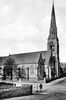
Park Church1006 viewsPark Church at the junction of East King Street and Charlotte Street, Helensburgh, now the Buddhist Meditation Centre of Scotland. Built in 1862 as the East Free Church, it became Park United Free Church in 1900 following the union of the Free Church and the United Presbyterian Church. It became Park Church in 1929 when the United Free Church and the Church of Scotland united as the Church of Scotland. The congregation became part of Helensburgh Parish Church, and in 2016 the church building was bought by Buddhists. Image published by M.C.Robertson, West End Library, Helensburgh, circa 1912.
|
|

PS Industry1006 viewsThis painting shows the early Clyde Shipping Company paddle steamer Industry in 1815. It appeared on a postcard published in 1990 to mark 175 years of the company and Glasgow being European City of Culture. Launched in 1814, she became the seventh steamboat to service the Clyde, mainly carrying luggage and cargo between Greenock and Glasgow, but also serving as one of the Clyde’s first tugs. Her career spanned over half a century and prior to her retirement she was the oldest steamer operating on the Clyde.
|
|

Glen Fruin cottages1006 viewsTwo young girls are pictured in front of cottages in Glen Fruin in this old image published by Stewart, Stationer, Helensburgh.
|
|

Rhu Village1005 viewsRhu Church and the village shops are pictured, circa 1905. The picture was published by Winton, Stationer, Post Office, Rhu.
|
|
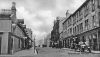
Lower Sinclair Street1005 viewsA view of Sinclair Street from Clyde Street, with old cars parked outside the shops. Image circa 1920.
|
|
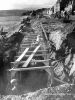
Air raid shelter1005 viewsAn air raid shelter was created on Helensburgh seafront to the west of the Henry Bell obelisk in World War Two by excavating the seafront grass opposite the James Street/John Street block. But it was never used as it kept being flooded by sea water.
|
|

Sunrise at Rhu1004 viewsThe Gareloch and Clyde beyond from Rhu at sunrise, circa 1916. The large vessel on the right is the Training Ship Empress.
|
|
| 2190 files on 183 page(s) |
 |
|
|
|
|
142 | |
|
|
|
|