| Most viewed - Military |
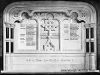
Cardross Roll of Honour1269 viewsThis memorial to the village fallen of World War One was unveiled by David Murray of Moorepark and dedicated by the Rev William Maxwell in the old Cardross Parish Church on September 26 1920. Some 200 young men went from the Parish to take part in the military operations, and of these 31 lost their lives.
|
|
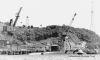
RNAD Coulport1261 viewsA Polaris submarine is docked at the Royal Naval Armament Depot at Coulport on Loch Long, where missiles are loaded and unloaded. Image, circa 1990, supplied by Jim Chestnut.
|
|
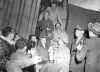
Bob Hope at Rosneath1252 viewsHugely popular American entertainer Bob Hope visited United States Navy Base Two at Rosneath with a concert party in 1945, and is seen arriving with Frances Langford and Jerry Colona. Afterwards there was a post-show party at the Princess Louise Officers Club, the Ferry Inn. Image supplied by Dennis Royal, author of the book 'United States Navy Base Two — Americans at Rosneath 1941-45.
|
|

Ark Royal's Farewell1243 viewsThe 25 year-old aircraft carrier HMS Ark Royal, the Royal Navy flagship, leaves Loch Long for the final time on Wednesday November 17 2010 after spending four days moored at the Glenmallon jetty for her ammunition to be removed, following the Government decision to decommission the 22,000 ton vessel. Photo: Crown Copyright; image made available by courtesy of the Clyde Naval Base, Faslane.
|
|
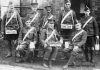
Hermitage Hospital fundraising1236 viewsDuring World War One from 1914-18 the Helensburgh Town Council-owned Hermitage House in Hermitage Park became a military hospital with a capacity for 58 patients who were sent from Stobhall Hospital in Glasgow. The wounded men in their blue uniforms were a familiar sight in the town, being wheeled around the park by their nurses. A number of local ladies and girls helped out in the hospital and the local Red Cross detachment also assisted the trained nurses. Patients also raised funds. Photo by Helensburgh lamplighter Edward Graham, supplied by his great great grandson Ian MacQuire.
|
|
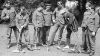
Croquet for all1227 viewsDuring World War One from 1914-18 the Helensburgh Town Council-owned Hermitage House in Hermitage Park became a military hospital with a capacity for 58 patients who were sent from Stobhall Hospital in Glasgow. The wounded men in their blue uniforms were a familiar sight in the town, being wheeled around the park by their nurses. A number of local ladies and girls helped out in the hospital and the local Red Cross detachment also assisted the trained nurses. This photo by Helensburgh lamplighter Edward Graham, supplied by his great great grandson Ian MacQuire, shows patients playing croquet.
|
|

RAF squadron visit1225 viewsA previously unpublished picture from a fighter pilot's scrapbook of members of the RAF's 610 Squadron on summer visit to Helensburgh from their base in Cheshire in 1938. They have donned tartan berets, much to the amusement of local children. The following year war broke out and two years later these men were fighting in the Battle of Britain and Helensburgh had its own RAF station. Image supplied by Robin Bird.
|
|
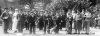
Hermitage collection1221 viewsDuring World War One from 1914-18 the Helensburgh Town Council-owned Hermitage House in Hermitage Park became a military hospital with a capacity for 58 patients who were sent from Stobhall Hospital in Glasgow. The wounded men in their blue uniforms were a familiar sight in the town, being wheeled around the park by their nurses. A number of local ladies and girls helped out in the hospital and the local Red Cross detachment also assisted the trained nurses. Many local girls met their future husbands among the wounded ‘tommies’, and patients were taken on outings in a horse-drawn carriage from Waldie & Co. in Sinclair Street.
|
|
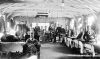
Hermitage ward1214 viewsDuring World War One from 1914-18 the Helensburgh Town Council-owned Hermitage House in Hermitage Park became a military hospital with a capacity for 58 patients who were sent from Stobhall Hospital in Glasgow. The wounded men in their blue uniforms were a familiar sight in the town, being wheeled around the park by their nurses. A number of local ladies and girls helped out in the hospital and the local Red Cross detachment also assisted the trained nurses. Many local girls met their future husbands among the wounded ‘tommies’, and patients were taken on outings in a horse-drawn carriage from Waldie & Co. in Sinclair Street.
|
|
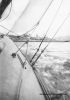
HMS Jamaica1205 viewsA June 1960 image of HMS Jamaica laid up in the Gareloch. Taken by Stewart Noble on board Tommy Wright's Gareloch yacht Catriona.
|
|
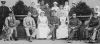
Hermitage patients1199 viewsDuring World War One from 1914-18 the Helensburgh Town Council-owned Hermitage House in Hermitage Park became a military hospital with a capacity for 58 patients who were sent from Stobhall Hospital in Glasgow. The wounded men in their blue uniforms were a familiar sight in the town, being wheeled around the park by their nurses. A number of local ladies and girls helped out in the hospital and the local Red Cross detachment also assisted the trained nurses. Many local girls met their future husbands among the wounded ‘tommies’, and patients were taken on outings in a horse-drawn carriage from Waldie & Co. in Sinclair Street.
|
|
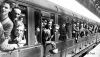
Heading for camp1198 viewsTerritorials of 162 Battery 54th Light Anti-Aircraft, Royal Artillery, from Helensburgh leave Helensburgh Central Station in September 1939 on route to England for training. They marched from the Drill Hall in Lomond Street to the station led by a piper. Among those in the picture are D.Kennedy, Gordon Hattle, Wug Robertson, G.Bailey, G.Nicholson, Tom Rennie, Angus McKell, Tom Rennie, Lachie McDonald, John Joseph Donnachie and Ian Lawrie. They were in France till June 21 1940, having served in Rheims protecting airfields and retreating to Marseilles where they embarked on a collier, possibly the last British ship to leave. They were taken to Gibralter. Image supplied by Lachie McDonald's daughter, Mrs Betty Stewart, who remembers seeing them march off to war.
|
|
|
|