| Most viewed - Mansions |

Rosneath Castle2252 viewsCompleted in 1806 by London-based architect Joseph Bonomi, this neo-classical mansion replaced a castle burnt down in 1802. It was used as a military hospital during the First World War and was home to Queen Victoria's daughter Princess Louise, the Dowager Duchess of Argyll, until her death in 1939. It was an HQ for the Rosneath Naval Base in World War Two, then abandoned, then damaged by fire in 1947, and demolished in 1961. Image circa 1903.
|
|

Camis Eskan House2249 viewsAn aerial view of Camis Eskan House, circa 1972, when it was in use as a hospital. The main part was built in 1648 by the Dennistouns, who had a royal connection through marriage. In 1836 the mansion was sold to Colin Campbell from Renfrewshire, and his descendants owned it until November 1946 when it was bought by the then Dunbartonshire County Council. Well known Helensburgh architect A.N.Paterson was commissioned by the then tenant, lawyer Leonard Gow, to modernise and extend the building in 1915. During the Second World War it was requisitioned by the Government and used as a hospital for Polish Army casualties, then rented to the County Council for use as a hospital for, first, TB patients, then infectious diseases, then maternity, and finally geriatric use. In 1979 it was developed for private flats and dwellings. Image supplied by Robert Reid.
|
|
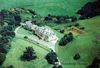
Camis Eskan House2235 viewsAn aerial view of Camis Eskan House, circa 1972, when it was in use as a hospital. The main part was built in 1648 by the Dennistouns, who had a royal connection through marriage. In 1836 the mansion was sold to Colin Campbell from Renfrewshire, and his descendants owned it until November 1946 when it was bought by the then Dunbartonshire County Council. Well known Helensburgh architect A.N.Paterson was commissioned by the then tenant, lawyer Leonard Gow, to modernise and extend the building in 1915. During the Second World War it was requisitioned by the Government and used as a hospital for Polish Army casualties, then rented to the County Council for use as a hospital for, first, TB patients, then infectious diseases, then maternity, and finally geriatric use. In 1979 it was developed for private flats and dwellings. Image supplied by Robert Reid.
|
|
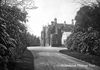
Ferniegair from the east2220 viewsFerniegair on West Clyde Street, home of the Kidston family and immediately east of Cairndhu, built in 1869 by architect John Honeyman and demolished in the 1960s. Image supplied by John Johnston.
|
|

Rosneath Castle demolition2209 viewsCompleted in 1806 by London-based architect Joseph Bonomi, this neo-classical mansion replaced a castle burnt down in 1802. It was used as a military hospital during the First World War and was home to Queen Victoria's daughter Princess Louise, the Dowager Duchess of Argyll, until her death in 1939. It was an HQ for the Rosneath Naval Base in World War Two, then abandoned, then damaged by fire in 1947, and demolished in 1961 — when this picture was taken.
|
|

Portincaple House2176 viewsPortincaple House on Loch Longside was also known as Ferry House, and the ferry plied across the loch to Mark. An open-air church service was held annually on the front lawn on Glasgow Fair Sunday. It was the home of ferryman and fisherman Finlay McNab and his family, and also the holiday home of the controversial Nottingham MP Charles Bradlaugh. Image circa 1902.
|
|

Crimea lounge2137 viewsThe lounge of Crimea at Portincaple, full of paintings by eminent artist James Kay RSA RSW who lived there for 33 years and worked in a studio in Glasgow. It belonged to his brother Alec, a shipping office manager. The name was chosen when they moved there in 1909 because his father was a Chief Petty Officer in the Royal Navy during the Crimean War, serving in the Black Sea area. James painted an elaborate mural of scenes from the Crimean on the walls of the main entrance. Image date unknown.
|
|

Bannachra Castle2079 viewsThe ruins of Bannachra Castle on the Luss road from Helensburgh, between Cross Keys and Arden. The Castle was in roughly the shape of a parallelogram, 46 feet long and 24 feet wide, and was three storeys high with a barrel vaulted basement, a main or hall floor and an attic floor. It is currently owned by the Lumsden family, which has owned the lands on which the castle is since the 19th century. Reputed to be on the site of a former construction, it was probably built in the 16th century. Image c1940.
|
|

Crimea, Portincaple2075 viewsCrimea, now renamed Dalriada, was the home of eminent artist James Kay RSA RSW who lived there for 33 years and worked in a studio at 79 West Regent Street, Glasgow. It belonged to his brother Alec, a shipping office manager. The name was chosen when they moved there in 1909 because his father was a Chief Petty Officer in the Royal Navy during the Crimean War, serving in the Black Sea area. James painted an elaborate mural of scenes from the Crimean War on the walls of the main entrance. Image date unknown.
|
|
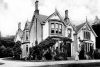
Glenarn2056 viewsGlenarn was built in the late 1830s, and soon after the garden received plants from Joseph Hooker's 1849-50 expedition to Sikkim, notably the Rhododendron falconeri at the side of the house. The garden was extended by the Gibson family over the following 50 years after they acquired the property in 1927. The Thornley family arrived at Glenarn in 1983 to find much to be done to restore the gardens to their former glory and then to extend their scope still further, work which is continuing. Image date unknown.
|
|
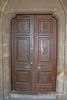
Cairndhu front door2047 viewsThe decorated front door of the former Cairndhu Hotel, later a nursing home for the elderly and now disused and boarded up. Originally Cairndhu House, it was built in 1871 to a William Leiper design in the style of a grand chateau for John Ure, Provost of Glasgow, whose son became Lord Strathclyde and lived in the mansion. 2011 image by Stewart Noble.
|
|
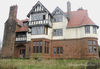
Morar House2010 viewsThe sadly neglected Morar House, which for some years was renamed Drumadoon, at the top of Upper Colquhoun Street, Helensburgh, opposite the Charles Rennie Mackintosh mansion Hill House. It was built by William Leiper in 1903, a year after Hill House, for the McAlpine family who owned a shipping firm, and was later the home of the Hogarth shipping family. For some years it was a nursing home, but has been unoccupied since then and is rapidly deteriorating. Photo by Stewart Noble.
|
|
|
|