| Last additions - Heritage |
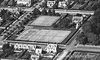
Helensburgh Tennis Club1536 viewsHelensburgh Lawn Tennis Club, occupying most of the block between West Princes Street and West King Street, in the days of its original wooden pavilions, from an aerial view of west Helensburgh. The image, date unknown, is from the collection of William Orr of Rhu, who was at one time the Burgh Engineer before becoming the Assistant Engineer for Argyllshire, and it was supplied by his great nephew, Alistair Quinlan.Dec 02, 2009
|
|
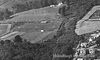
Helensburgh FC1523 viewsThe original Ardencaple pitch of Helensburgh Football Club, with the cricket pitch and West Montrose Street below, from an aerial view of west Helensburgh. The image, date unknown, is from the collection of William Orr of Rhu, who was at one time the Burgh Engineer before becoming the Assistant Engineer for Argyllshire, and it was supplied by his great nephew, Alistair Quinlan.Dec 02, 2009
|
|
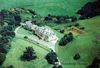
Camis Eskan House2203 viewsAn aerial view of Camis Eskan House, circa 1972, when it was in use as a hospital. The main part was built in 1648 by the Dennistouns, who had a royal connection through marriage. In 1836 the mansion was sold to Colin Campbell from Renfrewshire, and his descendants owned it until November 1946 when it was bought by the then Dunbartonshire County Council. Well known Helensburgh architect A.N.Paterson was commissioned by the then tenant, lawyer Leonard Gow, to modernise and extend the building in 1915. During the Second World War it was requisitioned by the Government and used as a hospital for Polish Army casualties, then rented to the County Council for use as a hospital for, first, TB patients, then infectious diseases, then maternity, and finally geriatric use. In 1979 it was developed for private flats and dwellings. Image supplied by Robert Reid.Dec 02, 2009
|
|

Camis Eskan House2217 viewsAn aerial view of Camis Eskan House, circa 1972, when it was in use as a hospital. The main part was built in 1648 by the Dennistouns, who had a royal connection through marriage. In 1836 the mansion was sold to Colin Campbell from Renfrewshire, and his descendants owned it until November 1946 when it was bought by the then Dunbartonshire County Council. Well known Helensburgh architect A.N.Paterson was commissioned by the then tenant, lawyer Leonard Gow, to modernise and extend the building in 1915. During the Second World War it was requisitioned by the Government and used as a hospital for Polish Army casualties, then rented to the County Council for use as a hospital for, first, TB patients, then infectious diseases, then maternity, and finally geriatric use. In 1979 it was developed for private flats and dwellings. Image supplied by Robert Reid.Dec 02, 2009
|
|

Methodist holiday1099 viewsA group of Methodists of all ages on holiday at Ardenconnel House in Rhu in the mid-1930s. The B-listed mansion was built by the Buchanan family in the late 18th century, and Ardenconnel was one of the principal estates of the old parish of Row. It was bought in 1899 by the Countrywide Holidays Association, and by 1908 could accommodate 120 guests. The CHA is the oldest walking holiday company in the country, set up in 1893 to encourage participation in, and enjoyment of, the countryside, and to this day, while no longer operating walking holidays, is still working hard to fulfil the vision of founder the Rev T.A.Leonard. The mansion was later converted into modern flats. Image by Jean M.Watson.Nov 29, 2009
|
|
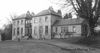
Ardenconnel House, Rhu2393 viewsA mid-1930s view of Ardenconnel House at Rhu. The B-listed mansion was built by the Buchanan family in the late 18th century, and Ardenconnel was one of the principal estates of the old parish of Row. It was bought in 1899 by the Countrywide Holidays Association, and by 1908 could accommodate 120 guests. The CHA is the oldest walking holiday company in the country, set up in 1893 to encourage participation in, and enjoyment of, the countryside, and to this day, while no longer operating walking holidays, is still working hard to fulfil the vision of founder the Rev T.A.Leonard. The mansion was later converted into modern flats. Image by Jean M.Watson.Nov 29, 2009
|
|

Craigendoran Avenue1136 viewsThe terraced houses on both sides of the unmade-up Craigendoran Avenue. Image circa 1905.Nov 19, 2009
|
|

Rhu Bay993 viewsA yacht and two other vessels lie at anchor in Rhu Bay during the Second World War. Image, published by Winton, Post Office, Rhu, circa 1944.Nov 19, 2009
|
|

The Cobbler1101 viewsThe Cobbler mountain near the head of Loch Long at Arrochar, also known as Ben Arthur. It is called the Cobbler because of its resemblance, from a distance, to a cobbler at work. Image circa 1900.Nov 19, 2009
|
|
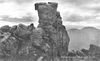
Cobbler summit1029 viewsA 1935 image of the summit of the Cobbler mountain near the head of Loch Long at Arrochar, also known as Ben Arthur. It is called the Cobbler because of its resemblance, from a distance, to a cobbler at work.Nov 12, 2009
|
|

Whistlefield1360 viewsThe store and station at Whistlefield are pictured with Loch Long in the background. Image circa 1910.Nov 10, 2009
|
|

Garelochhead1168 viewsLooking north towards east Garelochhead. Image circa 1905.Nov 10, 2009
|
|
| 2190 files on 183 page(s) |
 |
|
|
|
|
112 | |
|
|
|
|